
 Amyah Wright
By: Madison Maynard
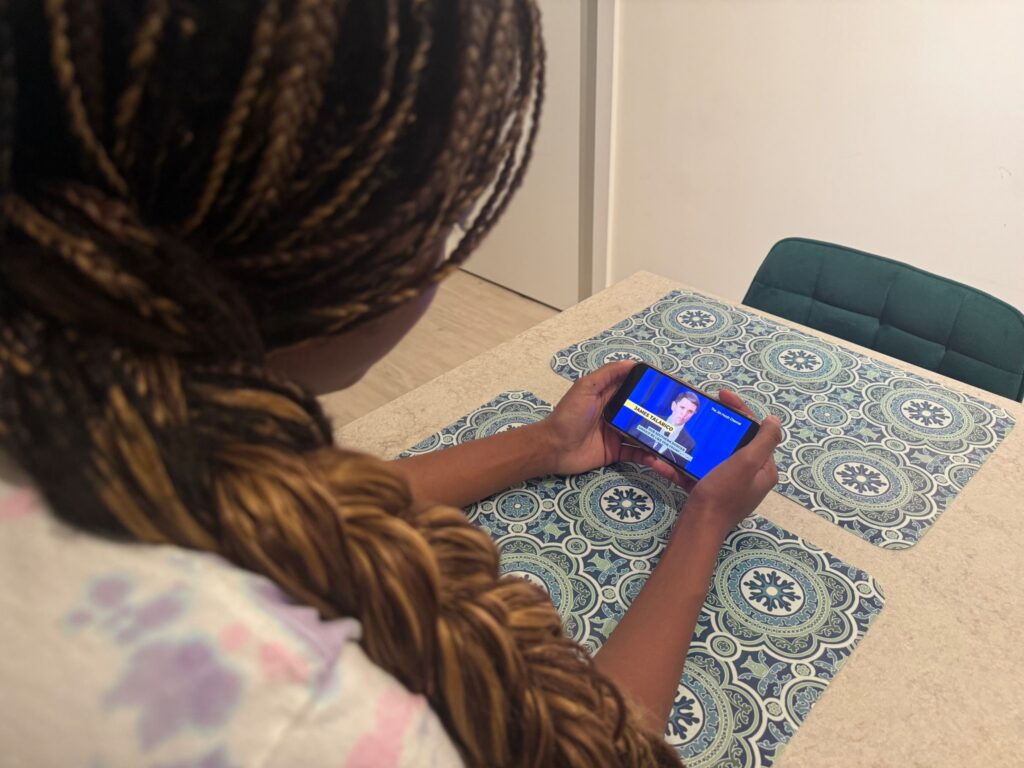
For both sides of the political aisle, 2026 is a consequential midterm cycle. These midterm elections decide for the rest of President Donald Trump’s presidency, whether the House and the Senate remain in a Republican majority or if the Democratic Party can take over both branches of Congress.
The Republican Party wants to remain in congressional leadership to continue to uphold the president’s agenda, which has been highly controversial as he is at a historically low presidential approval rating of 38%. Many Americans, especially due to the fallout from the Iran War, are suffering as the prices of gas are at an all-time high, and the prices of groceries, utilities and rent have skyrocketed. The cost of living has not gone down, which was a campaign promise of the president and Republicans across the nation in 2024. Democrats, this midterm cycle, are fighting to improve the lives of the American people, some with more progressive ideas and some having more moderate plans, but the fight against President Trump and the Republicans is the unifying message on the Democratic side.
So it’s absolutely fair to say that both the Republican and Democratic parties are taking this midterm cycle seriously. So what are each party planning to do in order to ensure their party is victorious in November?
They are spending over a billion dollars in “dark money,” with a lot of that money going to online digital political advertising.
But what is “dark money”? It is political spending funded by anonymous or undisclosed sources. And there is a large electoral impact in dark money spending. These sources, which could be nonprofit organizations, corporations, labor unions and wealthy individuals, fund millions of dollars in a variety of different aspects of politics, such as voter mobilization, television ads and digital campaigns, that oppose or support political candidates.
In the 2026 midterm elections, there is a clear rise in dark money funding in digital political advertising, which could have an impact on how social media and internet consumers vote, but that’s the point. The point is to influence public opinion, mobilize and excite voters to turn out for their specific candidate, and negatively affect the turnout for their opponent. Reporting shows that a significant amount of dark money spending moved into digital platforms, not just traditional broadcast television.
So what can people see from these dark money-funded digital political ads?
They are coming in a variety of different ways. There are a lot of policy- and issue-based digital ads, meaning the ad is not just saying to support or oppose a specific candidate, but addressing the policies of a political candidate. But normally in opposition to a political candidate’s specific policy, for example, housing policy or healthcare policy. The ad is basically used to scare people out of voting for a specific candidate. Even though this is identical to a campaign commercial, legally, the donors do not have to reveal their identity.
There is a loophole when it comes to social media influencers, as dark money groups pay online influencers to support and endorse their candidates on their digital platforms, but disguise it like the funding is coming from digital strategy firms or subvendors. These payments are practically undetectable because subvendor purchases do not have to be reported by federal campaigns.
In the last few weeks of a race, nonprofits are creating temporary “pop-up” super PACs to buy a ton of digital political ads, which creates an additional loophole that allows the nonprofits leeway to not reveal that they are the donors until after the midterms.
There are political organizations, such as the Ohio Legislative Black Caucus Foundation (OLBCF), that recognize the impact of dark money in their communities.
“The effect is corrosive. It breeds distrust; it makes people feel their vote does not matter, and it drives the very disengagement we are fighting,” Shayla Davis, president and CEO of the Ohio Legislative Black Caucus Foundation, said. “As a former state representative and vice chair of the Ohio Elections Commission, I have seen this from both sides, the chamber where laws are written and the commission that enforces them, and I know how hard this is to police after the fact. By the time a complaint is filed, people have already voted, and the damage is done. And in a moment when enforcement is weak and even duly elected officials abuse their power by lying without consequence, it becomes very hard for an ordinary voter to know what is true.”
There are many voters who oppose the heavy influence of money in politics, specifically its influence on digital platforms and the lack of transparency.
Cameron Phillips, a politically engaged law student at the University of Akron, expressed frustration with dark money funding social media influencers.
“I think it’s very dishonest and disingenuous,” said Phillips. “I feel like if you’re going to take money from political campaigns, stand on it, instead of trying to subtly push this narrative onto the people that watch you. I think that would very much cause me to lose a lot of trust in them. I feel like that would be the case for anybody.”
President Davis and the OLBCF are actively focusing on prevention of the negative influence of dark money in politics.
“Our research found that roughly 603,000 Black Ohioans step back from our midterm elections, and this manufactured noise is part of the reason,” said President Davis. “We counter it by meeting people with the truth where they already are. Our Civic AF, All Facts series explains plainly how the Ohio government works and what our vote actually touches, with no spin. We invest in trusted local messengers, because trust is built person to person, not ad to ad. And through our Voter’s Voice work, we partner with trusted organizations in the neighborhoods who listen first, so people know we are accountable to them, not to an anonymous donor.”
Because of the rise of dark money, specifically this mid- term cycle, lawmakers proposed legislation called the DISCLOSE Act of 2026, which will end “dark money” influence in U.S. elections by legislating that if there is an organization donating a significant amount of money, specifically over $10,000, to a political campaign, that information has to be publicly disclosed. This would also be the same for social media influencers who are paid by dark money groups; it would be officially considered political spending that needs to be transparently relayed to digital consumers.
If the DISCLOSE Act of 2026 passes, there will be a drastic change in our politics for years to come, as political funding will be more candid to the American public. It will be revealed to American voters which megadonors are funding and influencing digital political advertising, so there will be a lot more transparency in our politics, especially during critical election cycles when both sides of the aisle have a lot to gain or a lot to lose. Voters should have a right to know the billionaires who are impacting political campaigns in their state.
If the DISCLOSE Act of 2026 does not pass, dark money is only going to have a greater impact in future elections. If over a billion dollars was spent in this midterm cycle, we can anticipate a larger influence in the 2028 presidential election and beyond. Voters are going to continue going to the ballot box without knowing who is financially influencing the constant political attack ads of their candidates in their state and without knowing that the social media influencers they watch are being paid by political campaigns to influence them.
President Davis believes that the passage of the DISCLOSE Act of 2026 will take away the ability for these anonymous donors to hide in future election cycles.
“If the DISCLOSE Act required major donors to be named, voters could finally consider the source, and fearmongering loses much of its power in the light,” said President Davis. “For grassroots organizers, disclosure would be a game changer. We are almost always out-spent by anonymous money, so knowing who is funding the opposition lets us follow that money, tell the real story, and hold the powerful accountable to the very communities they are trying to influence.”
Phillips would also like to see the DISCLOSE Act of 2026 pass in Congress.
“I think that every single candidate or campaign should have a duty to disclose to the American public where their funding is coming from, who their biggest funders are,” Phillips argued. “I think that would allow me to have more trust in the Democratic process. I think it would hold people more accountable and make people more trustworthy if they were forced to disclose any of their major donors.”
Overall, money has affected politics for years, but if nothing is done legislatively, dark money will continue to leave voters in the dark.


 Jada Ingleton
 Kynadi Hyde
 Arthur Cribbs
 Lauryn Forbes
 Shayla Farrow
Add comment