
 Trinity Taylor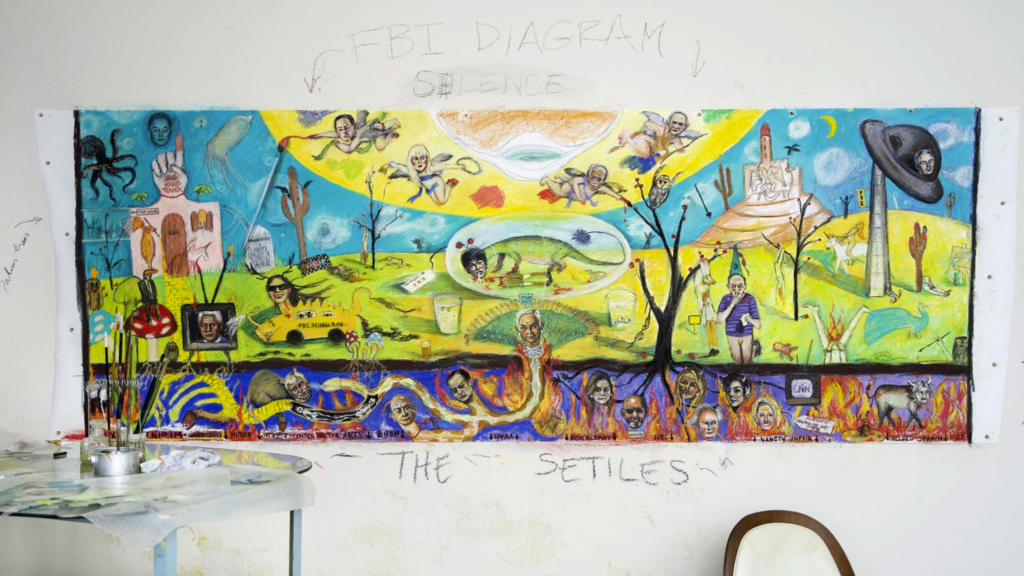
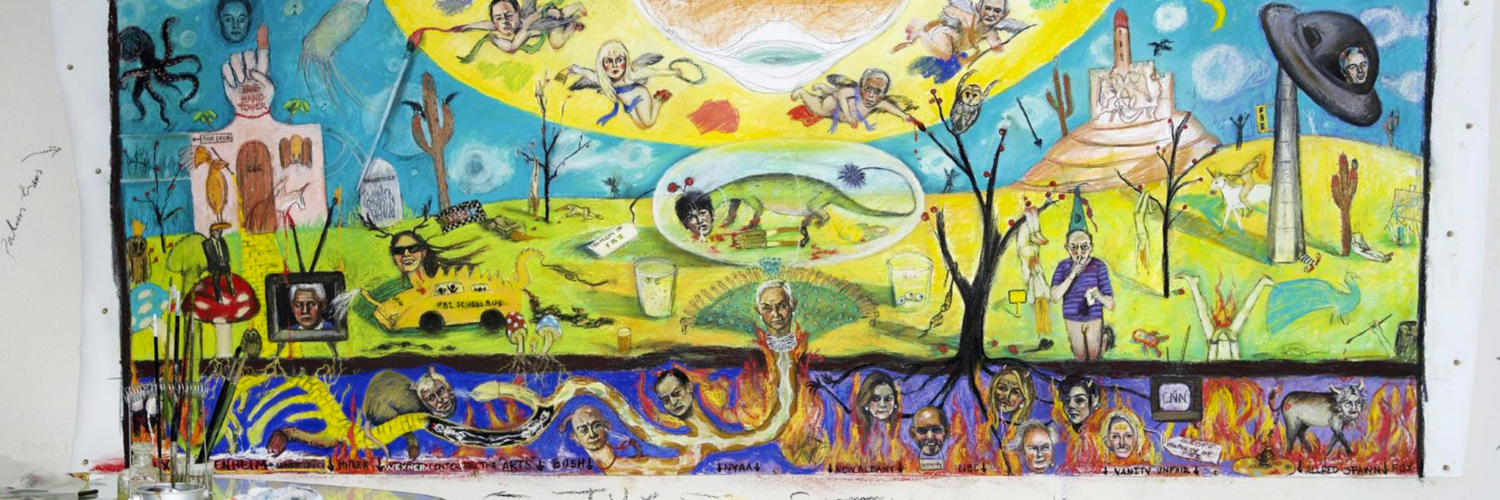
Maria Farmer’s art titled “The Setiles.” (Photo: Documentary)
The “Jeffrey Epstein: Filthy Rich” documentary does more than just retell the crimes of Jeffrey Epstein. It shows the elite’s sex trafficking and abuse system that allowed those crimes to continue for years.
Through survivor testimonies, the series explains how Epstein used his wealth, influence, connections, and manipulation. Specifically, to cultivate an environment where young girls were exploited. One of the most important parts of the documentary is how it shifts attention away from Epstein himself and focuses instead on the women who experienced the abuse. This allowed their stories to shape the narrative.
Another key part of the documentary is its portrayal of the failure of major institutions. Law enforcement failures, legal loopholes, and Epstein’s powerful social connections all helped him avoid accountability for years. The series shows how money and status can influence the justice system and determine who is held responsible.
By the end, the documentary feels less like a story about one criminal and more like an examination of how wealth and power can shield wrongdoing, while also showing the persistence of survivors.
One of the most powerful moments in the documentary is when Maria Farmer uses her artwork to visually expose the abuse network surrounding Jeffrey Epstein and Ghislaine Maxwell.
Instead of only telling her story through interviews, she creates dark, symbolic paintings that depict powerful men as predatory figures operating within a hidden system. The art reflects how the trafficking operation functioned almost like a business, with structured routines, calculated recruitment, and a network designed to maintain control and efficiency. It was all structured, protected by wealth, and enabled by the elites: the people who hold the most power in the world. Her art becomes a form of testimony, translating trauma and corruption into something people can see and confront.
What makes the ending especially impactful is that it reframes the documentary from just a story about crime into one about survivor resistance and truth-telling.
In 2016, Maria Farmer filed a federal civil lawsuit under the Victims of Crime Act against Jeffrey Epstein and Ghislaine Maxwell, alleging she was assaulted in 1996 and later intimidated by Maxwell. She had already reported Epstein to the Federal Bureau of Investigation and the New York Police Department in 1996, but no immediate action was taken, highlighting a major institutional failure that allowed the abuse to continue.
Farmer’s art exposes how exploitation is normalized within powerful environments and shows how survivors reclaim their narrative through creative expression. By ending with her work, the documentary suggests that exposing systems of abuse sometimes requires more than legal evidence; it can also come through cultural and artistic forms that force society to acknowledge what it tried to ignore.


 Jada Ingleton
 Kynadi Hyde

 Arthur Cribbs
 Lauryn Forbes
 Shayla Farrow
 Tanaija Kee

 Sydney Goitia-Doran
Recent Comments