
 Tanaija Kee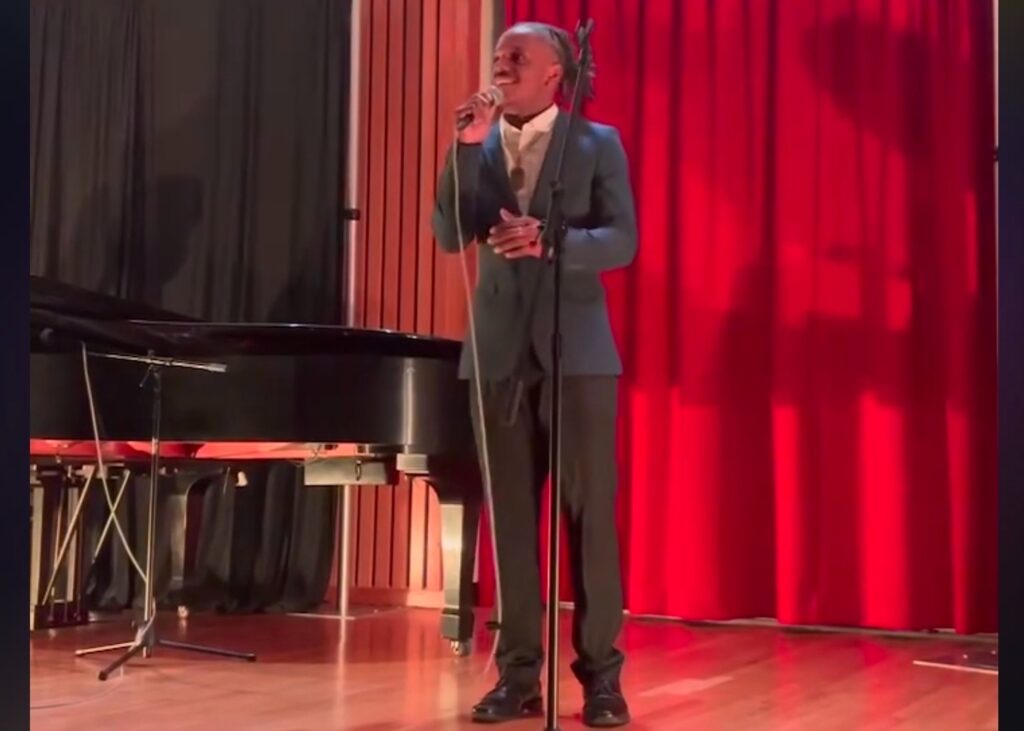
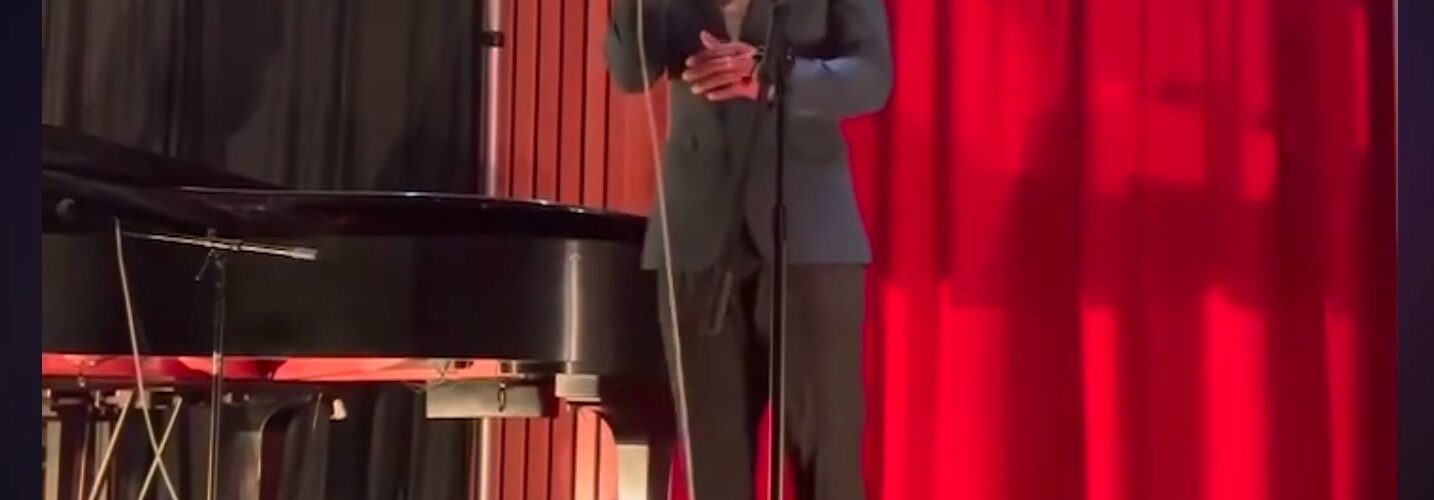
Nabee Samad performs a jazz standard as part of his vocal training at Howard University. (Tanaija Kee// 101 Magazine)
For many years now, Howard University has been seen as a launchpad where talent is nurtured and careers are created. However, for students these days who are working hard to become musical successes, the reality is that getting one’s foot in the door in the music industry is not as easy as landing a 9-to-5.
For Nabee Samad and Ana Milistis, both Howard University students, entry into the music industry follows two distinct paths. Although the institution provides education and community, the lives of these young singers make it clear that many obstacles determine access to opportunity and success.
According to the Bureau of Labor Statistics, a music career remains a highly competitive field, with many more musicians than job opportunities. Reports from the Recording Industry Association of America further confirm growth in the music production and distribution sectors, leading to increased competition among new artists.
Valerie Eichelberger, Associate Professor of Howard University’s Department of Music, said students will be successful in the field if they establish professionalism while studying.
“They must have the discipline to practice regularly, develop their voice or instrument, and be performance-ready so they can have successful auditions. Once they are known in the industry, they will be called upon more frequently.”
Nabee Samad wasn’t someone who joined school with prearranged industry connections. Samad’s first experience with music recording took place when he was seventeen, in a homemade studio during the pandemic, relying on instinct and confidence.
That confidence shifted quickly.
“Singing into a mic is different from singing out loud, you’re gonna hear yourself scratching places that you ain’t hear. You never knew your voice was scratching… your ego gets checked,” said Samad.
Samad performs “Moanin’” by Lambert, Hendricks & Ross, reflecting his jazz training. (Tanaija Kee// 101 Magazine)
What followed was a steep learning curve. Music became less about natural ability and more about technical understanding—learning chords, training his ear, and practicing consistently.
“I had a naive perspective towards music,” he said. “It’s a lot more to it than you would have expected.”
While at Howard, he received structure in the classroom and gained experience performing through his ensembles. However, when it came down to actually entering the industry, there seemed to be a disconnect.
“In a sense, they get you prepared for performances, but they don’t necessarily put you out there unless you’re probably like one of the best students,” said Samad.
Without consistent access to larger opportunities, Samad has relied on smaller gigs, either with the help of friends or by self-producing his music.
“The sooner I get my music out, the sooner people can listen to it,” he said. “Then hopefully, sooner or later, I’ll pop up.”
Nabee Samad performs an original song he wrote in his first year. (Tanaija Kee// 101 Magazine)
In contrast to the experience at Howard University, students Samad and Milistis had prior exposure to their fields of interest. Although Milistis’ first experiences with music were in a religious context, her participation in the Duke Ellington School of the Arts in Washington, D.C. changed the course of her development.
“Most of that came from going to Duke Ellington,” she said. “Our department chair had a lot of connections, so that opened up a lot of opportunities.”
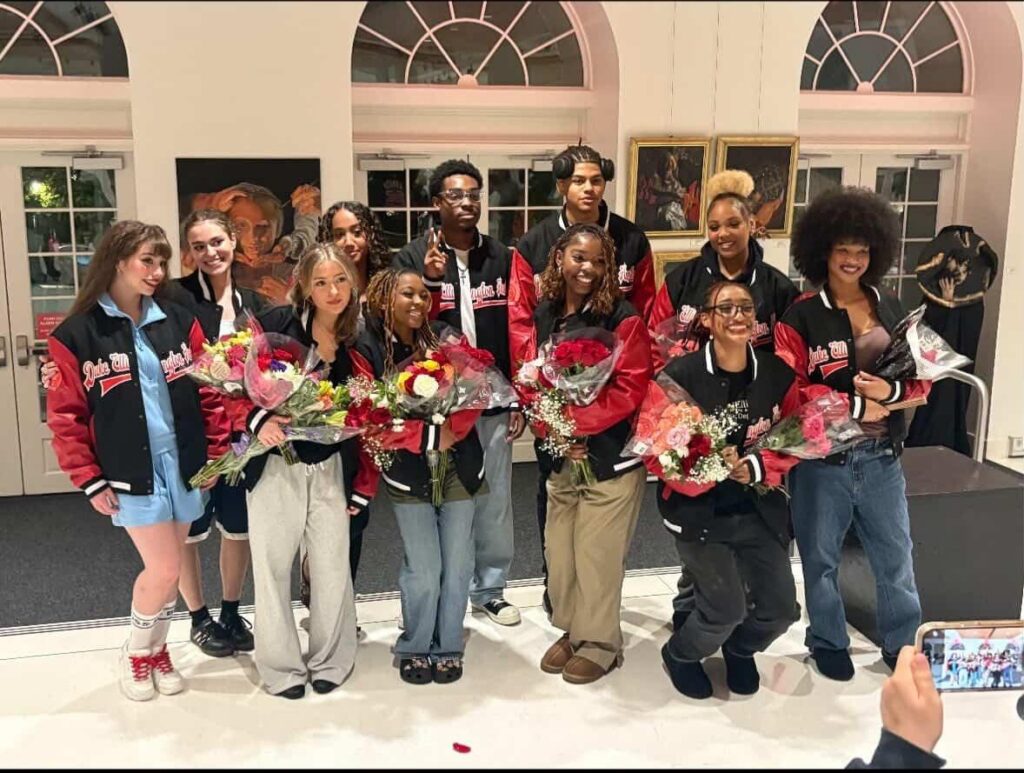
Ana Milistis performs with her senior vocal class from the Duke Ellington School of the Arts. (Tanaija Kee// 101 Magazine)
Having started along this path even before joining the university, Milistis is now preparing for an internship at NPR as an audio engineer and live sound technician.
“I’m working on learning how to run a radio station and mix live audio,” she said. “I have a summer internship at NPR here in D.C., so I want to be prepared and confident going into it.”
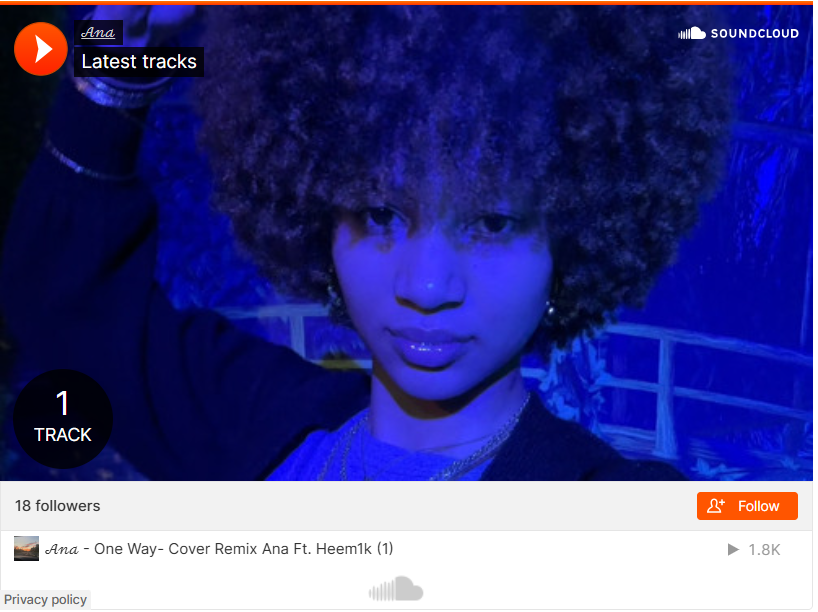
Ana Milistis performs while continuing to develop her vocal and technical skills. (Tanaija Kee// 101 Magazine)
She credits Howard with helping her further expand her network.
“Howard has helped me a lot with building connections, especially with other young Black artists,” she said.
Still, her progress reflects a key difference: she is building on access that existed before college, not starting from scratch. The difference between those students and others is that while some have talent, others bring experience and preparation even before coming to Howard University. This gap reflects a bigger truth regarding how the business works.
According to Chris Royal, Doctor of Musical Arts (D.M.A.) and Associate Professor of music at Howard University, students entering the field must understand the difference between the music industry and the broader entertainment industry, which can have different expectations regarding performance, presentation, and visibility.
“Jazz, Classical and other such music is primarily music performance. The entertainment industry may use music, film or anything, but often visuals are most important. In fact, one doesn’t have to actually perform music to be a music performer in the entertainment business, ” he said.
That distinction, he suggests, shapes how students are evaluated and what opportunities become available to them.
“Students need to consider the industry not by name but by expectations. Entertainers are worried about weight gain and actual skills. The music industry certainly cares about the presentation, but much has moved closer to entertainment as many performers look better on stage than how they actually sound,” he said.
The contrast between experiences highlights a broader issue within the idea of a “pipeline.” Both students are talented. Both are putting in the work.
Samad points to connections as the defining factor.
“Through your connections, you can learn a lot of things that your talent won’t get you,” he said.
Milistis sees it differently.
“I think talent is what leads to connections,” she said. “If you’re really strong in what you do, people will notice.”
The two provided their views on the industry, noting that it depends on preparation, exposure, and opportunity, which not all students have. The concept of a pipeline through which students can move from classroom success to the music industry is well established—there are steps to take to progress from the classroom into the business.
This kind of pipeline works for Samad and Milistis—and some other Howard University students—but for others, the reality is more complicated. Some have established connections based on their history, while others are only beginning to break into the field and have to learn not only how to make music but also how to enter an industry that doesn’t necessarily afford equal entry.
A pipeline exists at Howard University; however, for some students, it’s not a clear pathway; it is something they have to find, build, or fight their way into.


 Jada Ingleton
 Kynadi Hyde

 Arthur Cribbs
 Lauryn Forbes
 Shayla Farrow
 Amyah Wright
Recent Comments