
 Amyah Wright
By: Madison Maynard
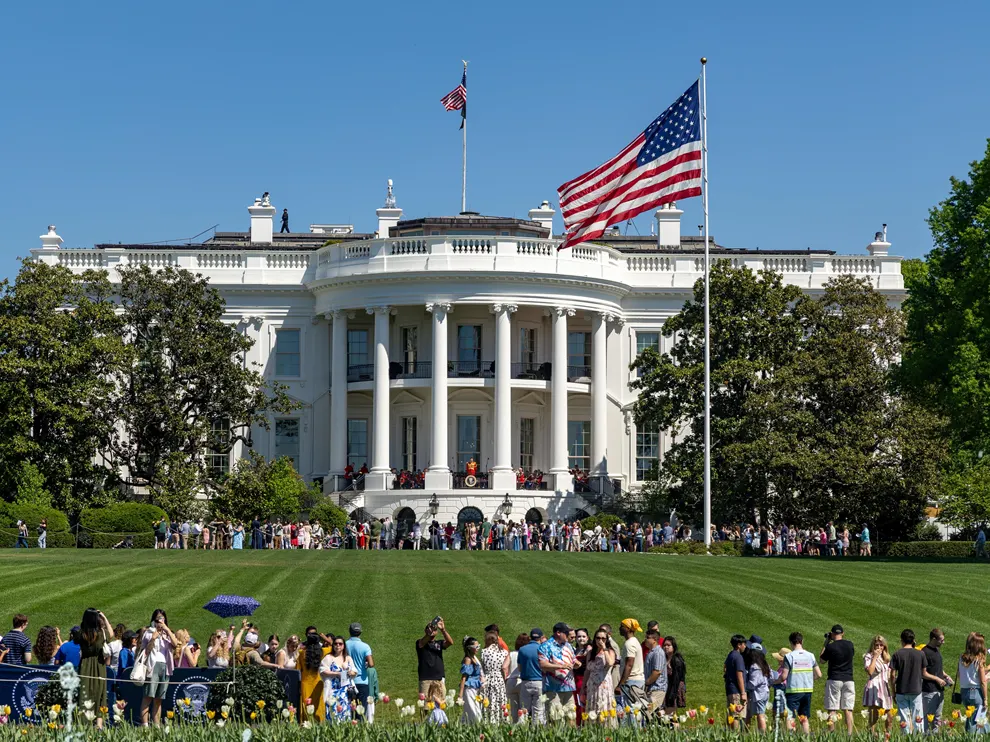
WASHINGTON – On Sept. 18, 2026, President Donald Trump made the historic announcement that he was going to ban reporters from CNN, MS NOW, and Politico from entering the White House grounds. The very next day, the ban was in effect, and the Secret Service confiscated the target outlets’ reporters’ press passes and told them they were not allowed to enter the premises.
This decision not only impacts the three news organizations that were banned, but every single journalist across the nation, even student journalists who want to enter into this industry, who cover national politics and hold the powerful accountable in their reporting.
“The White House media ban makes it difficult to factually cover the breaking news straight out of the White House,” Elijah Spencer, a news and politics writer for The Hilltop, said in reaction to the media ban. “Now we have to rely on impractical ways to get the sources needed to cover an event and breaking news factually.”
When making the announcement, President Trump declared that the three news organizations broadcast “FAKE NEWS” and deliberately reported unfavorably on the Trump administration in order to disparage a Republican administration and Republican politicians. To stand in solidarity with the banned outlets, the rotating TV press pool, which includes CNN, ABC News, CBS News, NBC News, and Fox News, temporarily stopped covering President Trump’s events; The Associated Press and The Washington Post also withheld photography pool distribution.
After the targeted reporters had their press passes confiscated, CNN, MS NOW, and Politico sued the Trump administration, accusing the administration of violating the First Amendment right to free speech and the Fifth Amendment right to due process by banning their reporters. U.S. District Judge Timothy Kelly issued a 14-day temporary restraining order requiring the administration to restore the journalists’ credentials, enabling them to re-enter White House grounds. The judge highlighted the Fifth Amendment issue, noting the journalists received no prior notice before their passes were confiscated. Even after the ruling, the journalists were initially denied access, but their access was eventually reactivated.
Richard Scott, a retired journalist for Fox 8 Cleveland, used the word “appalling” to describe how he felt about the media ban and believes that the goal of the decision was to control the narrative that’s published.
“Because if you control the narrative, you control the people,” Scott said. “What the government wants to do is control what you see and hear each and every day.”
Zion Williams, the audio editor for The HillTalks, called the decision concerning and unprecedented, and expressed the need for young journalists to look at media in a different light.
“It makes me question my future in the media, and question how I’ll navigate and where I want to work, and how I want to represent myself as a journalist,” Williams said.
Even though this is an unparalleled decision by President Trump to ban three major news outlets at once, there were other incidents where he restricted access to certain journalists and outlets.
During Trump’s first term, the White House revoked the press pass of CNN White House correspondent Jim Acosta after an intense exchange at a press conference. CNN and Acosta sued the administration, arguing that the revocation violated the First and Fifth amendments. Judge Kelly also ordered the White House to restore Acosta’s press pass and grant him access to White House grounds.
More recently, during Trump’s second term, The Associated Press was limited in the access they were able to receive in the White House because the news organization refused to change “Gulf of Mexico” to “Gulf of America” in their stylebook. A few months later, U.S. District Judge Trevor N. McFadden ruled that the administration must allow The Associated Press to have full access again.
For years, President Trump called the American press “the enemy of the people” and has shown his belief in this through his actions in both of his presidential terms. With the midterm elections rapidly approaching and President Trump falling behind in popularity, his attack on democracy through restricting press access might not end here; the court’s ruling against him has not stopped him in the past.

 Jada Ingleton
 Kynadi Hyde
 Arthur Cribbs
 Lauryn Forbes
 Shayla Farrow
Add comment