

 Amyah Wright
By: Gabrielle George
Pressing play at the start of an album is just like opening the first page of a book or starting a new series. You just have to keep on listening to see where the story takes you. Each song flows into another, giving the listener a little more context along the way. The order of an album’s songs is intentionally structured, creating a beginning, middle and end. An album is much more than a collection of songs: they provide a larger context for what the artist wants the audience to feel, think, or take away from the art.

By searching for individual songs people often miss the opportunity to immerse themselves in a new world. One can provide deeper context into who the artist is.
Music is often consumed one song at a time, but some albums are just made to be consumed from beginning to end. Skipping through songs is like reading only odd number chapters from a book; you’re missing key details that connect the story together.
Albums allow artists the space to build stories through lyrics, transitions, interludes, and features. These intricate details all work together to help an artist communicate something deeper to the audience. In contemporary music where streaming apps allow consumers to skip through songs, it makes it harder for consumers to see the value in album storytelling.
Albums can function like narratives because they have progression, themes, and intentional sequencing that helps drive their story forward. The sequencing of songs is not randomized and leads one idea into the other. The beginning of a story introduces the world of the album and what the general concept is about. The middle develops the idea through emotions or concepts. The end concludes the world with a reflection, resolution, or new perspective.
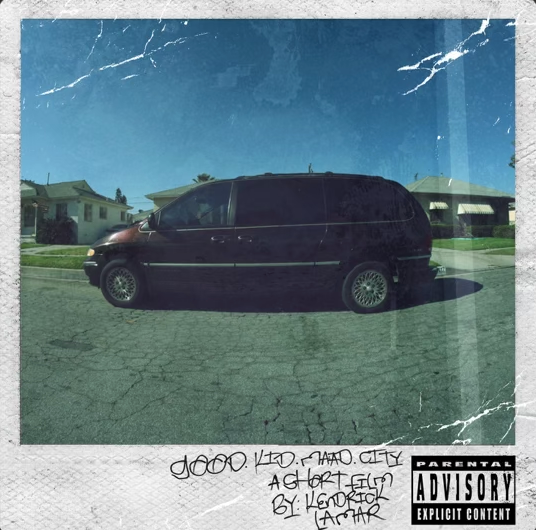
Transitions and interludes serve as breaks to provide additional context to the story. Kendrick Lamar’s “good kid, m.A.A.d city” is a good example of using transitions and interludes as story breaks. The interludes would ask questions that the song would elaborate on. Sound and production play a huge part in storytelling. Music isn’t just about what’s being said but how the beat is produced with the intention of conveying a certain emotion. A faster tempo or heavier beat can signal that a story is moving into a different stage.
Breaking down Beyoncé’s “Lemonade” and Frank Ocean’s “channel ORANGE” for instance, provides context into the different types of narrative storytelling in contemporary music.
The sequencing in Beyoncé’s “Lemonade” helps convey the overarching theme of the five stages of grief after getting cheated on. The song’s order is in the same sequence as the five stages: denial, anger, bargaining, depression, and acceptance. This structure is important because it walks the listener through what life is like in these stages. “Pray You Catch Me” and “Hold Up” represent the denial stage. “Pray You Catch Me” features a mellow beat with hopeful lyrics that her partner catches her in emotional turmoil. “Hold Up” is more upbeat, but in her lyrics she’s comparing herself to the other women and walking the audience through how she found out. She’s also cycling back and forth between rationale saying “what’s worse, looking jealous or crazy?”
The album then transitions into anger with stronger beats and harsher lyrics. Songs like “Sorry” and “6 Inch” represent the anger stage. In these songs she takes her power back with one of her most iconic lines “You better call Becky with the good hair.” “Daddy Lessons” and “Love Drought” are representations of the bargaining stage. In “Love Drought” she evaluates what life would look like if she tried to fix their relationship.“You and I could move a mountain,” conveying a theme that she is still hopeful that they are stronger together. In the depression stage the tempo of the beat gets slower. “Sandcastles” is extending on the idea that she presented in “Love Drought” but she’s less hopeful. The song has a very soulful undertone making it drastically different from the others.
The acceptance stage is marked by the songs “Forward” and “Freedom” “Forward” is reliant on the emotion evoked from the depression stage; she uses James Blake to help her evoke this emotion. “Freedom” features Kendrick Lamar and includes an end of the song interlude that represents how she pulled herself through these stages. Listening to just “Formation” would not convey the whole theme of the five stages of grief after getting cheated on. In order to understand what Beyoncé went through and why she ultimately chose to stay with Jay-Z. It’s important to listen to the album because it is a story.
Frank Ocean’s “channel ORANGE” tells a narrative story in an abstract way; it doesn’t follow the traditional story plot like Beyoncé’s “Lemonade.” The album feels like you’re flipping through television channels and every song encapsulates different emotional wavelengths. The album explores themes of unrequited love, sexual identity, addiction, class, and the exploitation of women. The album starts with “Start” an interlude that sounds like a television turns on and sets the scene for the rest of the album. “Thinkin Bout You,” “Bad Religion,” and “Forrest Gump” all explore the theme of unrequited love despite the songs being placed throughout the album.
Ocean frames the album like a puzzle or a mystery book, some songs are like clues and provide context for later. “Thinkin Bout You” tackles a multitude of complex emotions, not only does it cover unrequited love but it also covers sexual identity. Ocean uses the song to describe his first time with a man.
“You know you were my first time, a new feel” he says as he reminisces on the love he had. “Pilot Jones” and “Crack Rock” tackle addiction in two ways: from a relationship with a partner and using the character of a man to explain how cocaine drives him away from his family. The opening line of “Crack Rock” is “You don’t know how little you matter until you’re all alone.” The line provides context into why the man in the story turned to drugs in the first place; he felt insignificant.
Ocean has a way of evoking a feeling in listeners that that humanizes the character more. “Super Rich Kids” and “Sweet Life” explore the emotional void that wealth may offer. “Super Rich Kids” explores the cracks within the class system from the experience of the wealthy. Ocean questions;Is financial security actually worth the emotional poverty? He conveys this by describing a character that just wants to be loved with the line “Parents ain’t around enough.”
His theme of the exploitation of women is mainly dissected in “Bad Religion”, “Pyramids”, and “Pink Matter.” “Bad Religion” explores the exploitation of a woman through the lens of the “closet” and how the character uses women to suppress his queer feelings.
The almost 10 minute song “Pyramids” is split into halves and draws a drastic contrast in how the viewpoint of women has changed throughout history. In the first half, the song follows the ancient Egyptian Cleopatra with her symbolizing power. The song uses its dramatic transition into the second half to auditorily set the scene as a teleportation to present day. The second half is set in the present day where a stripper named “Cleopatra” works at “The Pyramid.” Strip Clubs are where many men go to feel a temporary sense of power over women. The song questions: why has society changed its viewpoint of women?
Ocean has a way of questioning the way society views certain groups by humanizing them. From queer love and drug addicts to the wealthy and women; why do we let society’s judgment of people define them? The album conveys the complexities of man from its abstract structure to the themes it chooses to highlight.
Beyoncé’s “Lemonade” and Frank Ocean’s “channel ORANGE” aren’t the only contemporary albums that use storytelling in their art. SZA’s “Ctrl”, Kendrick Lamar’s “DAMN”, and J.Cole’s “4 Your Eyez Only” also use structural, lyrical, and technical elements to tell a story. If albums are created with the intention to be consumed from start to finish then why do listeners skip around?
Here is how the next generation of artists view the process of album curation.Tamia Thomas, a sophomore Public Relations major, Hip Hop Studies minor, from Queens, New York explains why albums are created with the intention of telling a story.
“Albums are created with the intention of telling a story because it mirrors a situation or stage of the emotion an artist has recently gone through or is going through.” Thomas explains how listening to an album from start to finish can give the listener content on what the artist is trying to say.
Some may argue artists don’t say anything anymore, but are we actually listening?


 Jada Ingleton

 Kynadi Hyde


 Arthur Cribbs
 Lauryn Forbes

 Shayla Farrow
Add comment