

 Amyah Wright
By Nailah Williams
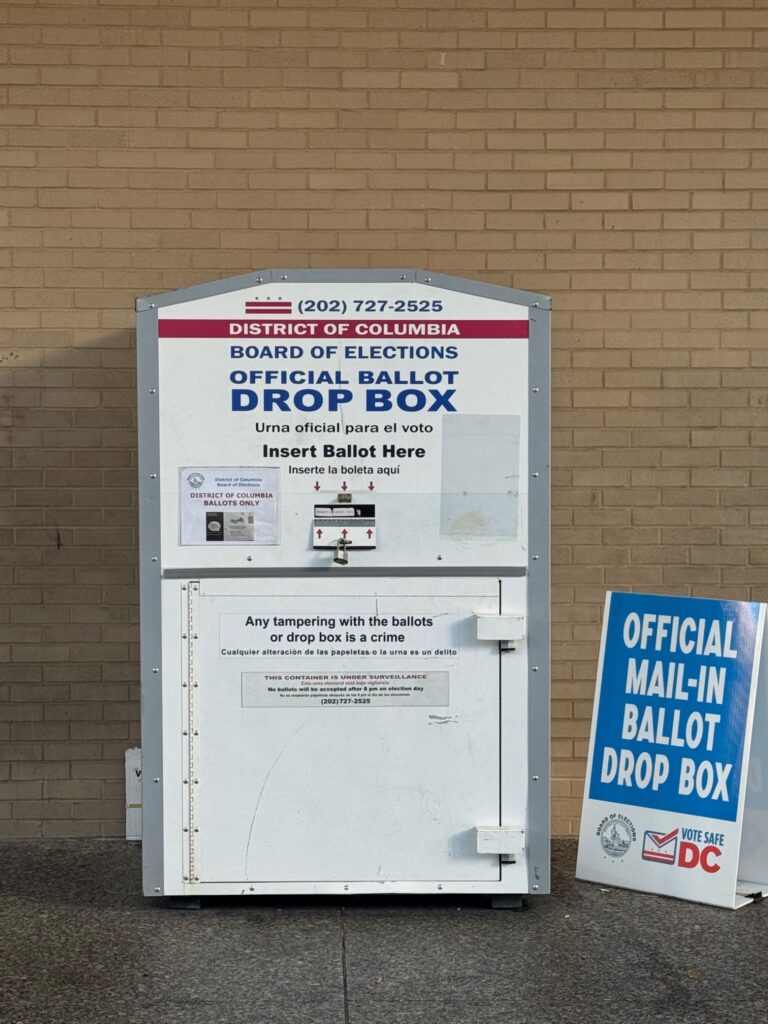
For millions of college students, the ballot arrives by mail, if it arrives at all.
Mail-in Ballot Drop Box outside of Ward 2 polling site in Washington
The senior who registered at her parents’ address in Ohio will not be home on Tuesday. Neither will the sophomore from Georgia studying hundreds of miles away, or the nursing student who works clinical shifts from dawn to dusk. For them, a voice in the 2026 midterms depends on the safe arrival of one envelope.
Absentee ballots are central to that effort, especially for students who attend school away from home. These students can vote by mail-in ballot using a parent’s address, or they can designate their college town as their primary residence to vote there in person. Each state sets its own residency requirements, and meeting them can take time. According to Circle, 28% of youth mailed in their ballot, 25% of Black youth voted absentee and 10% youth dropped off their ballot at a drop box or other designated location. That choice leaves them dependent on the mail system.
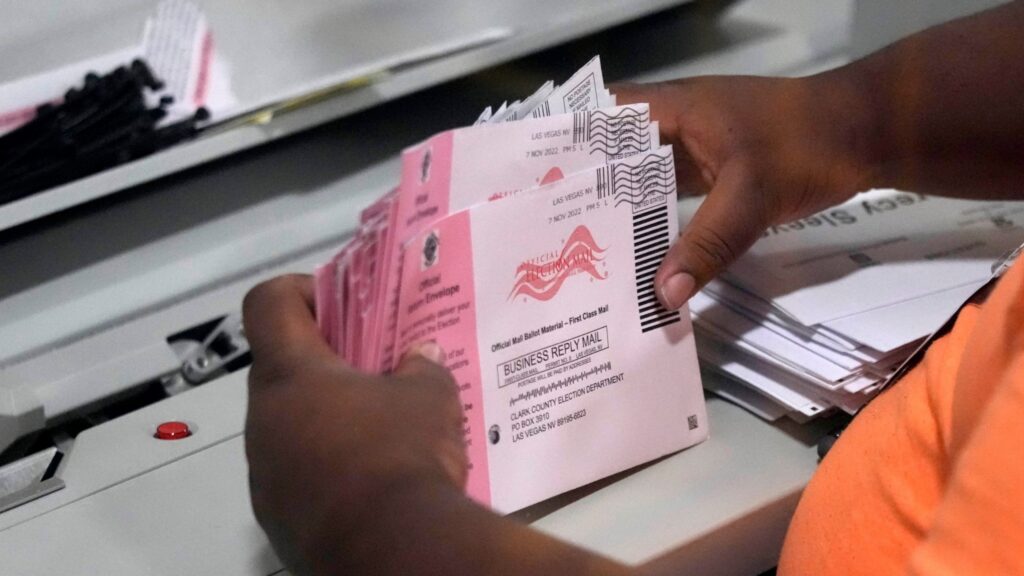
About a quarter of the population uses mail in ballots.
Not every student is comfortable with that. Nie-Jile Young, a senior international business major from Long Island, New York, is choosing to go home to vote.
“I don’t have any experience with mail-in ballots, as I would be voting in person for a second time now,” she said. “Yet with all the rumors of voting safety, I personally did not feel comfortable using mail-in ballots.”
Voting advocates advise students who vote by mail to request their ballot as soon as it’s available, return it promptly, check their state’s deadlines and track it to confirm it arrived. Student voter turnout rates raise the stakes. In 2024, 53% of eligible college students voted, compared to an estimated 47% of all voters ages 18 to 29.
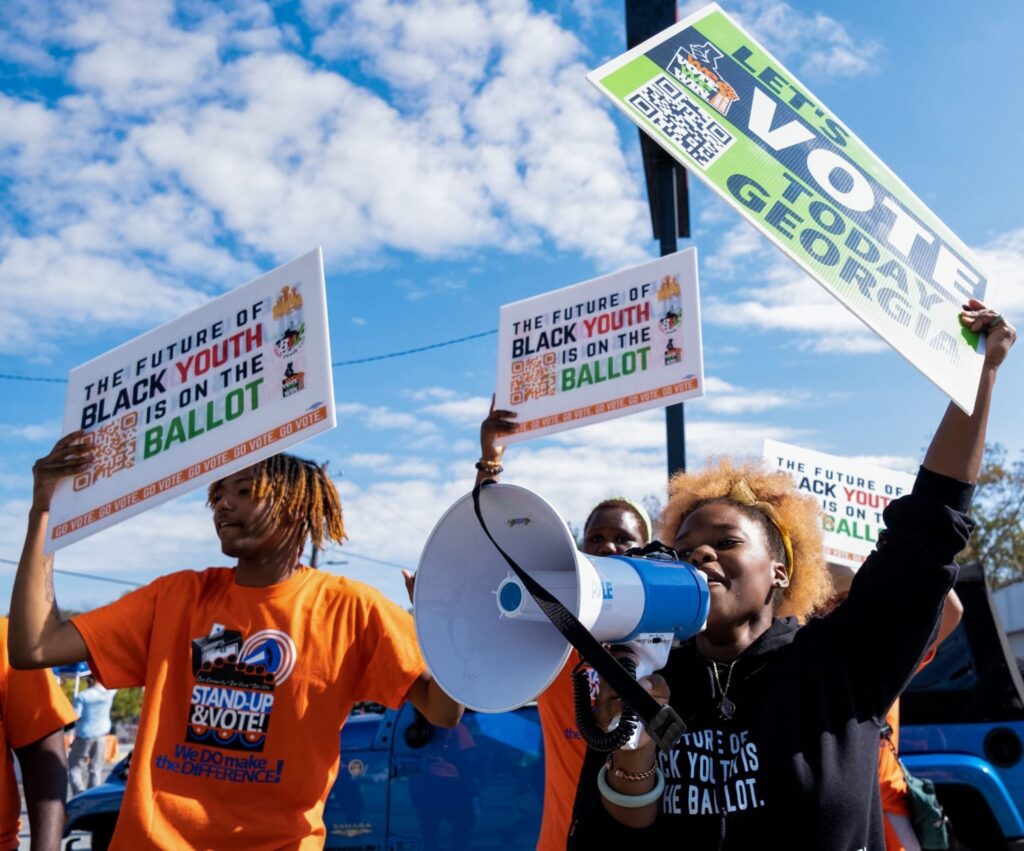
Ryan Johnson, a junior media management major with double minors in business administration and economics, from St. Louis, Missouri, understands those stakes.
This election was Johnson’s first time mailing in his vote. In elections prior, he would vote in St. Louis County, Missouri. In this county the stakes are high on the ballot with Amendment 3 possibly banning all abortion again; Amendment 6 “Respect Missouri Voters,” which would make it difficult for lawmakers overriding votes-approved status, and Proposition A that asks voters if Missouri should use a 2025 congressional map drawn by lawmakers at President Trump’s urging. Because of this, Ryan’s mother made sure to send his ballot to him on time by the mail.
“I think all elections are important, but the local elections are even more important because they impact your community. My state is red, but my county is blue, so my vote will help turn Missouri around,” Johnson said.
Even a motivated student can face hurdles while navigating mail-in voting; especially with changing rules. In June, the Supreme Court ruled 5–4 that federal law doesn’t bar states from counting ballots postmarked by Election Day despite a late arrival. That ruling preserved a grace period that matters to students mailing ballots from far away.


 Jada Ingleton

 Kynadi Hyde


 Arthur Cribbs
 Lauryn Forbes

 Shayla Farrow
Add comment