
 Grant Roundtree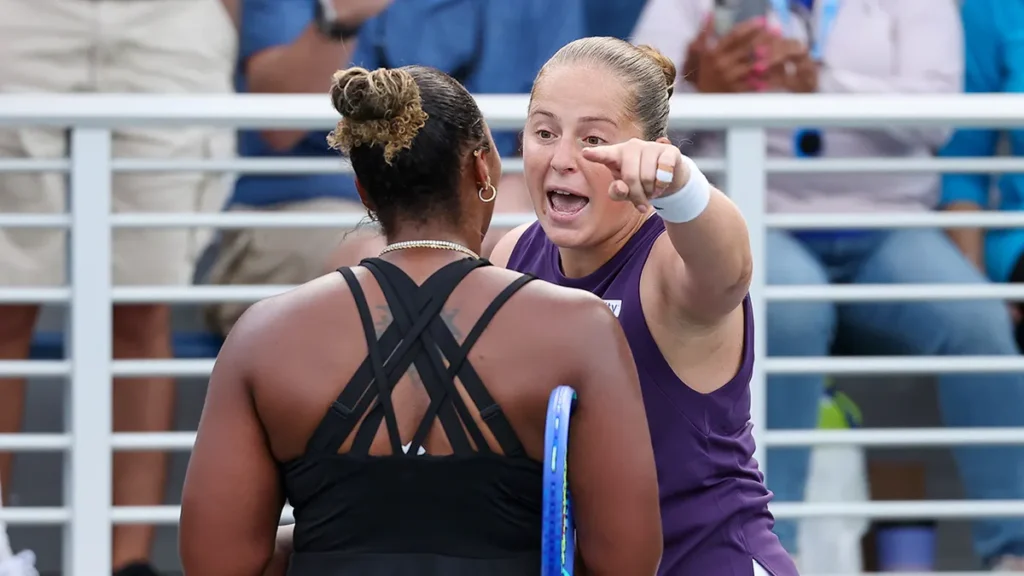
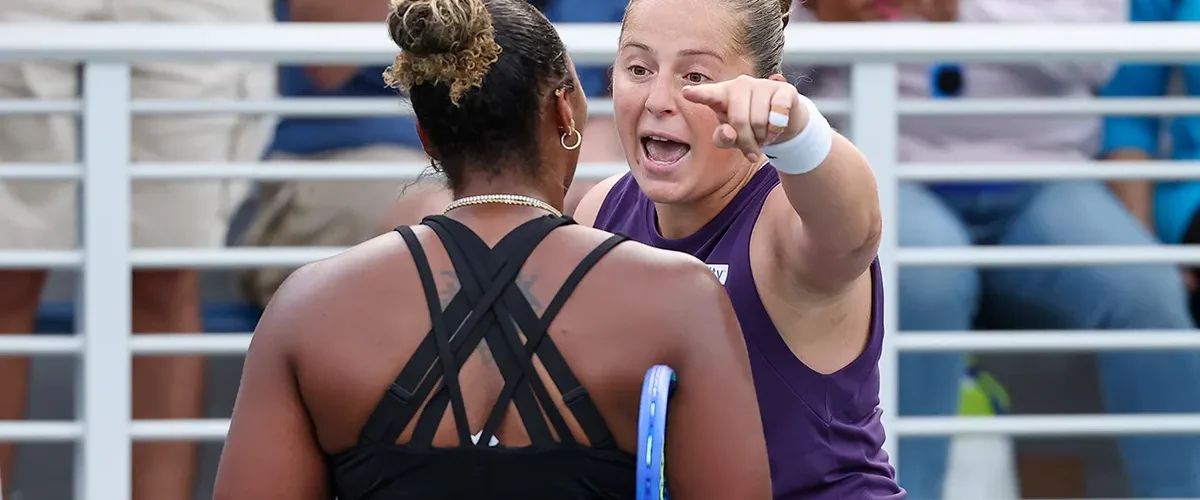
Jelena Ostapenko argues with Taylor Townsend after their U.S. Open match on August 27, 2025. (Courtesy/Fox News)
The stadium lights at Flushing Meadows shine a little brighter during the U.S. Open. But on August 27, 2025, when Taylor Townsend walked off the court after dismantling Jelena Ostapenko in straight sets, the spotlight unexpectedly turned on her.
Townsend had played one of her cleanest matches of the year, dictating with her lefty serve and finishing points at the net with her signature crisp volleys. She had every reason to celebrate. Instead, what dominated headlines was not the win but the tense handshake line that spiraled into a storm.
Ostapenko, visibly frustrated, accused Townsend of poor etiquette after a net-cord winner. Shortly after came words that cut deeper: calling Townsend “no class” and “no education”. The crowd gasped. Townsend pulled her hand back. Her face was a mixture of disbelief and defiance. For a Black woman in a predominantly white sport, the sting was more than personal. It was generational.
A Clash That Echoed Beyond the Court
In the hours that followed, Townsend was measured, even restrained, in her response. “Even the mannerisms of her hand pointing at my face, like I’m a child… It was bad behavior and it was also very hypocritical,” she told reporters. To her, this was not just about a post-match spat. It was about being diminished in ways Black women too often recognize.
The tennis world erupted. Naomi Osaka, never shy about calling out injustice, described Ostapenko’s comments as “one of the worst things you can say to a Black tennis player in a majority white sport.” Former doubles star Rennae Stubbs, now a respected analyst, called the language “coded” and part of a pattern of dog-whistle insults. Social media picked up where commentary left off, turning Townsend into a symbol of poise in the face of adversity. Her social media following doubled within days.
By August 30, Ostapenko had apologized publicly, attributing her phrasing to a language barrier. Townsend was not rushing to accept it. “That’s nice that she did that,” she said, almost wearily. “At the end of the day, I think that it’s a learning lesson for her … It’s better just to focus on yourself.”
In most situations, people can blame harsh words on the heat of the moment, saying they weren’t thinking. But instead of simply admitting being wrong and from her mistake, Ostapenko leaned on the excuse of a language barrier, making her apology seem less genuine.
Her response was not bitter. It was about boundaries –on and off the court.
A History of Being Policed
This was not the first time Townsend’s intelligence, fitness, or legitimacy had been questioned. Back in 2012, when she was the No. 1 junior in the world, the U.S. Tennis Association refused to fund her because of concerns over her body. Never mind the trophies piling up or the fact that she had already proven herself on the global stage. The narrative became about whether she “looked” fit enough to be a champion.
When Black women excel in spaces where they are the minority, their success is often met with skepticism. That moment of these hurled by Ostapenko crystallized something: talent would not be enough. She would have to fight for her career in ways her white peers would not. The message was clear. Her body, her demeanor, her very existence in the sport would always be up for debate.
Townsend has done more than survive. She has thrived. She is a multiple Grand Slam doubles champion and one of the fiercest competitors on tour.
The Cost of Belonging
Tennis has been tied to privilege. From the steep costs of new gear to the constant expenses of traveling for tournaments. Players often need private coaching and specialized training to truly compete, which makes access even more limited.
Echoes on Howard’s Courts
At Howard University, a historically Black institution where the tennis courts sit just steps away from classrooms filled with future lawyers and journalists, Townsend’s story reverberates.
For Howard athletes, the barriers often feel all too familiar. Tennis scholarships are limited. Travel budgets lag behind powerhouse programs. HBCUs provide spaces of affirmation, but the athletes still face the broader culture of tennis when they compete outside the MEAC.
Imani Jean, a junior on the Howard women’s tennis team, said she saw herself in Townsend’s poise under pressure. “Taylor Townsend has my full support. As Black women in tennis, we are often overlooked yet held to higher standards. Taylor took the high road against Ostapenko’s comments, congratulated her opponent, and walked away with grace. It showed me that no matter what is said, we are expected to hold ourselves to a higher standard.”
Their words echo Townsend’s. Her confrontation with Ostapenko was not just about two women on a tennis court. It was a proxy for the countless moments when Black women are told, in coded or direct language, that they do not belong.
A Serve Toward Change
In the match between Taylor Townsend and Jelena Ostapenko, Ostapenko complained about net cords (when the ball touches the top of the net and still lands in play). She claimed there were too many calls going Townsend’s way and even suggested the officials weren’t catching them.
In the end, Townsend advanced to the second week of the U.S. Open. What lingers is not just the scoreline, but the image of a Black woman refusing to shrink in the face of insult.
For Howard players, it is a lesson. For Black women across tennis, it is validation. For the sport itself, it is a reckoning.
Townsend may have been the one swinging the racket that night in New York, but the reverberations stretched all the way to college courts in Washington, D.C., and far beyond.
Her story is not just about winning matches. It is about demanding space, rewriting narratives, and insisting that the game of tennis, like every space, must evolve.
For Black women, stepping on court has never just been about tennis. It has always been about playing, winning, and surviving a second game: the one against the system itself.


 Jada Ingleton
 Kynadi Hyde
 Arthur Cribbs
 Lauryn Forbes
 Shayla Farrow
 Amyah Wright
Recent Comments