

 Grant Roundtree
Kyren Lacy during a photoshoot. Photo by ABC News used under fair use for educational purposes.
The crash made headlines before anyone had all the facts. Kyren Lacy, a former Louisiana State University wide receiver, was accused of causing a collision that killed 78-year-old Herman Hall. Within hours, the narrative was written. Lacy was reckless, a coward, a “thug.” The public did not wait for evidence. The media did not either.
Even the way he played the game became proof against him. His speed, his celebrations, his intensity on the field, things that made fans cheer, were suddenly twisted into signs of danger.
“First off, if you were in college, you ain’t a thug. Let’s be real, that ain’t what you’re about,” former NFL quarterback Cam Newton said in a podcast months before.
The words were meant to critique a touchdown celebration, but online and in headlines, they became part of a pattern, a lens through which Lacy’s character was judged. The energy that once electrified stadiums was now evidence against him.
By Oct. 4, 2025, the narrative should have changed. Lacy’s attorney, Matthew Ory, released a new video showing his client’s car was nearly 70 yards behind the crash.
“Keyword: behind the vehicles,” Ory told HTV-10. He added, “That is not how this story was ever painted. Never.”
The footage should have silenced the critics, yet social media and sports commentary barely paused to reconsider their assumptions. Months of vilification had already cemented Lacy’s image in the public mind.
Politicians weighed in as well, further highlighting the racial undertones of the story.
“Why did you pick this kid to frame him for this accident he did not cause?” State Rep. Denise Marcelle of Louisiana asked bluntly during an interview with WAFB 9.
Edmond Jordan, president of the Louisiana Legislative Black Caucus, emphasized the moral stakes, saying, “Accountability is not a partisan issue, but a moral one. Kyren Lacy’s family and the people of Louisiana deserve answers.”
In a media environment that quickly leaned on stereotypes, these voices were rare but crucial reminders that fairness was possible, even if delayed.
Even as new evidence emerged, some officials doubled down on the narrative of guilt. Louisiana State Police released a video stating, “All evidence collected supports the conclusion that Lacy’s reckless operation triggered the chain of events.”
Attorney General Liz Murrill added, “Every witness identified the green Charger Kyren Lacy was determined to be driving, as having put the events in motion.” The words were clinical, measured, yet their effect was anything but. For months, the public had already absorbed a story of a villain in LSU colors, and these official statements confirmed the image rather than tempered it.
The media’s framing went beyond headlines. Every tweet, commentary clip and opinion piece subtly reinforced the idea that Lacy’s personality on the field, his confidence, his celebrations and his intensity made him a threat.
Friends described him as selfless and grounded, the kind of person who lifted everyone around him. “He always put everybody else before himself,” LSU offensive lineman Paul Mubenga said. “So that kind of shook us back, made us realize that we have a lot to be happy about and a lot to look forward to.”
A young man’s joy became proof of guilt. His humanity was overwritten by perception. In the relentless cycle of reporting and reaction, nuance disappeared. Context was optional.
The pressure became unbearable. Lacy’s death by suicide laid bare the devastating consequences of a society quick to judge without knowing the truth.
A young athlete who had been lauded for his talent, celebrated for his work ethic and admired by teammates and fans alike was gone. While the tragedy spurred discussions about mental health and media responsibility, those conversations were still largely framed by the images of him many had already seen: angry, defiant, a thug.
Lacy’s agent, Rocky Arceneaux, spoke out against the NFL and media for their treatment of his client.
“To the NFL, shame on you for revoking Kyren’s [NFL] Combine invitation without acknowledgement or consideration of the facts,” he said.
The revocation of his chance to showcase his skills on a national stage symbolized how the consequences of a narrative could ripple far beyond social media or newspaper columns.
It is easy to look at Lacy’s story and see a single failure, one crash, one investigation, one misstep, but the reality is systemic.
Black athletes, particularly young men in high-profile sports, are constantly scrutinized, their actions hyper-visible and interpreted through lenses of bias.
When Lacy celebrated big plays with gun hand motions, a gesture common in football’s culture of intensity and bravado, critics used it to paint him as dangerous or violent. But football is a game built on emotion, and what players do on the field is performance, not a reflection of who they are off it. From on-field celebrations to personal conduct, every move is analyzed, dissected and often weaponized.
Lacy was not simply destroyed by a crash. He was destroyed by a story the world wanted to tell. A story that ignored nuance, disregarded evidence and amplified prejudice. The speed at which the story traveled and the fervor with which it was consumed left no space for recovery, explanation or forgiveness.
In the end, the tragedy is not just Lacy’s death. It is the collective failure of media, officials and public perception to see beyond the stereotypes placed on young Black men in sports. Racism shaped how his story was told and how quickly the world believed it. Until institutions and audiences reckon with the power of narrative and the racial bias that fuels it, the next young athlete could face the same swift judgment, painted as guilty before he has a chance to speak.


 Jada Ingleton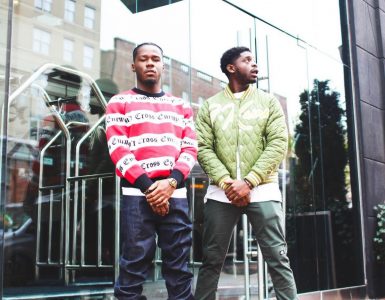
 Kynadi Hyde

 Arthur Cribbs
 Lauryn Forbes
 Shayla Farrow
 Amyah Wright
Recent Comments