
 William Armstead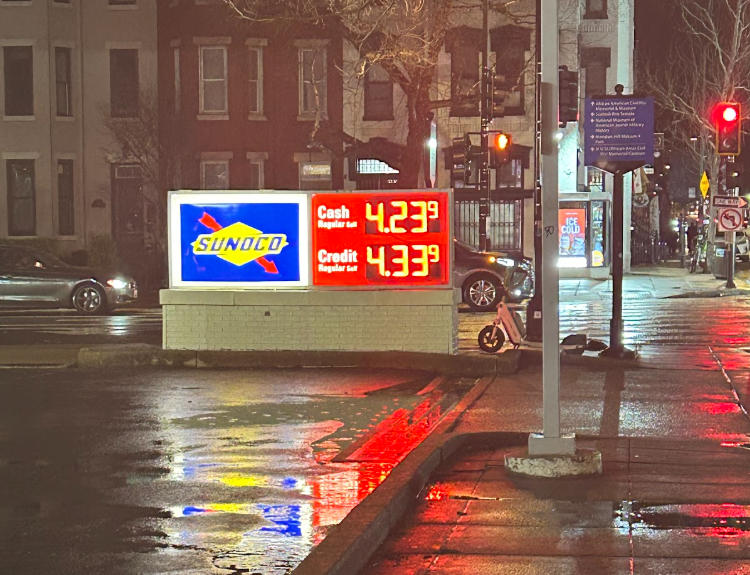
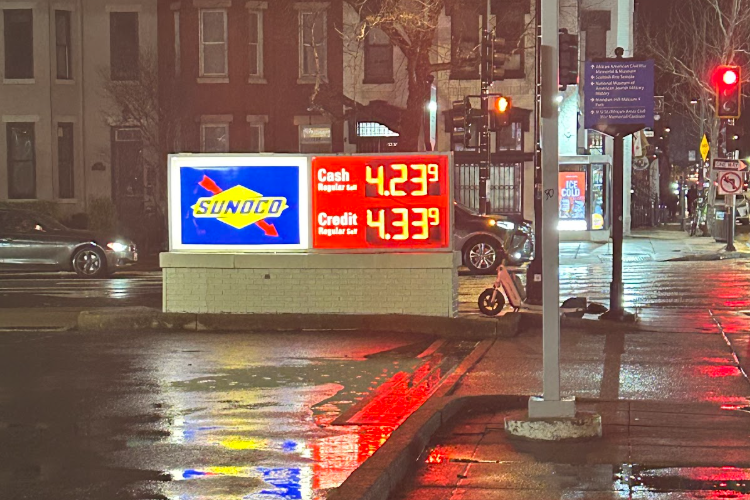
The Sunoco gas station on U Street in Washington, D.C., has prices climbing above $ 4 per gallon. (Photo Credit: William Armstead)
The United States is facing abnormally high costs at the pump. In Washington, D.C. specifically, average prices went from about $3.05 per gallon to $4.10 per gallon in a few short weeks.
The national average in mid-February was $2.98 per gallon. Now, the average is $4.00 per gallon. Washington, D.C. is usually a couple of cents higher than the national average.
Analysts from CBS News say the war is disrupting global oil supply, resulting in the price increase. After the U.S. carried out air strikes on Iran, killing Supreme Leader Ayatollah Ali Khamenei. The strikes were in response to attacks on American personnel in the region.
The Strait of Hormuz, a global oil channel that contains about 20% of the world’s total oil and gas, was shut down by Iran because of their high tensions with the United States and Israel.
As a result, Americans are paying the price at the gas pump.
The high prices are affecting commuters in the city and how they manage their money.
“As someone who travels within the DMV for their job and internship, it’s a lot to try and manage,” said D.C. commuter and Howard University alum, Kyle Alexander. “I used to be able to get by with $25-$30, and now that’s not even getting me to half a tank.”
Gas is now a significant expense for many D.C. residents and a particular stressor for students who operate on a tight budget.
“The job market is already hard as is, with many not getting paid much, and now they must factor in another larger bill just to get gas,” Alexander said.
While many drivers are struggling to keep up with rising gas prices, others say they’re benefiting from not having to rely on fuel.
“I’m very grateful to own a Tesla right now. For a full charge at the Supercharger, it only totals to about $14 versus paying $50 or $60 for a full tank of gas if I had a gas-powered car,” said Howard University senior Moses Malloy.
Rising gas prices are affecting not only commuters in the city but also delivery services like DoorDash, where drivers say longer-distance orders are being picked up less frequently.
Additionally, students with cars are choosing public transportation, like the Metro, which costs about $2.25 per swipe, to avoid fuel costs.
As issues between the United States and Iran continue, a timetable for a reduction in prices at the pump is uncertain.


 Jada Ingleton
 Kynadi Hyde

 Arthur Cribbs
 Lauryn Forbes
 Shayla Farrow
 Amyah Wright
Recent Comments