
 Briana Outlaw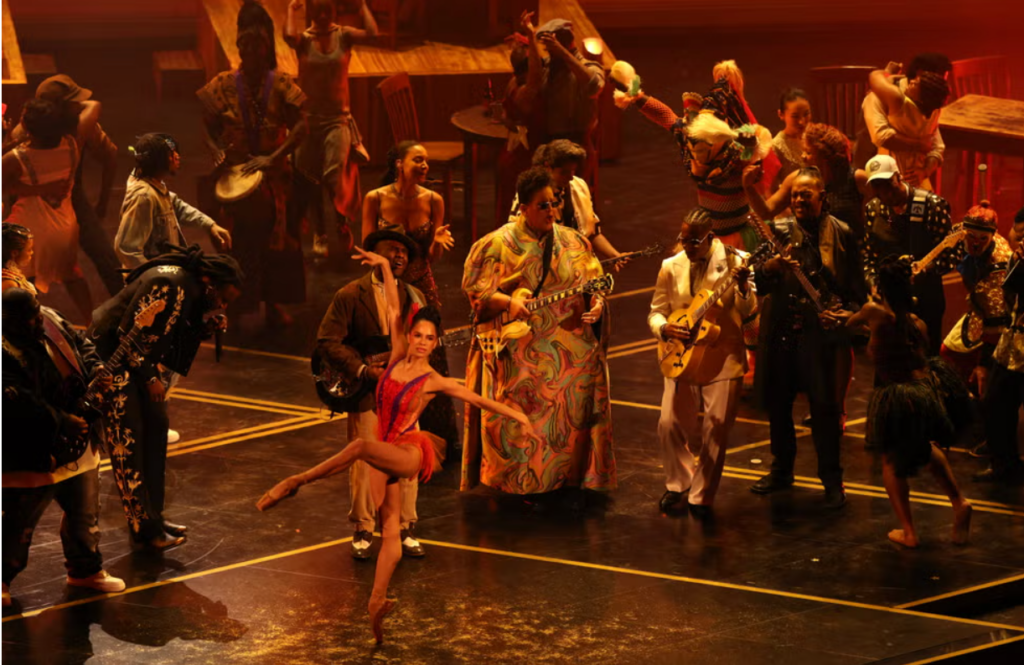
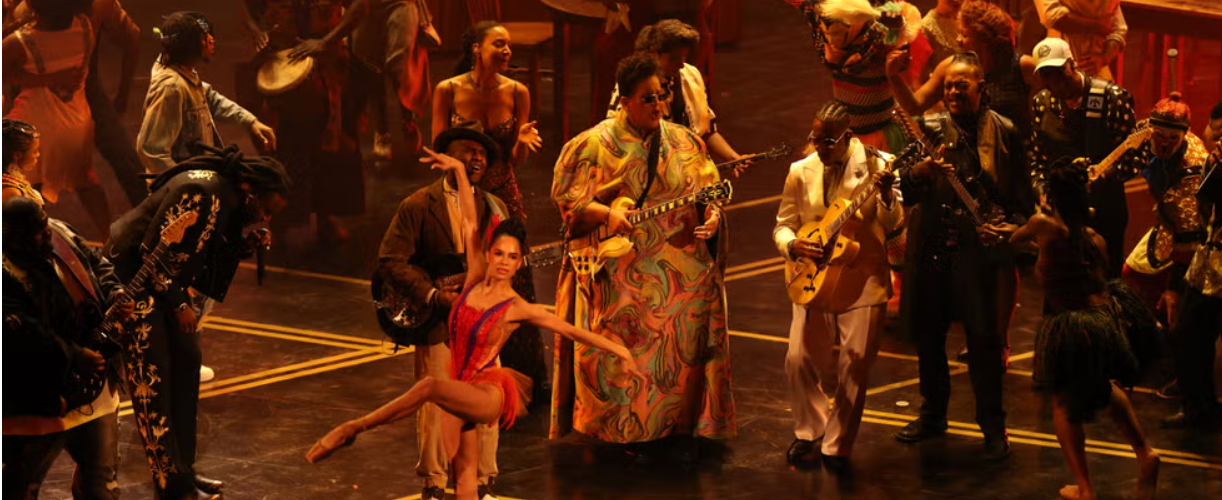
Misty Copeland during “Sinners” performance at the 2026 Oscars. (Credit: Patrick T. Fallon/Getty Images)
When Misty Copeland took the stage during the Oscars, it felt like a special moment that didn’t require much explanation.
Her presence alone carried meaning. As the first Black principal ballerina at the American Ballet Theatre, Copeland represents a shift in an art form that hasn’t always made space for people who look like her.
In connection with “Sinners,” a Black-centered film nominated for multiple Oscars, the performance took on an added layer, positioning ballet within a broader cultural conversation.
Yet as clips of the performance spread across social media, the conversation started to move in a different direction.
Many people began connecting the moment to recent comments from Timothée Chalamet, an American-French actor, who in a public interview, said that “no one cares” about ballet or opera anymore. This statement was widely shared and discussed.
One viral post on X read “Misty Copeland comes out of retirement to put Timothée Chalamet in his place during a live ‘Sinners’ performance at the Oscars.” However, no one from the “Sinners” team has confirmed that the performance was a response.
Copeland’s performance was framed less as a standalone moment and more as a response: something that proved a point or pushed back against what he said.
Social media moves quickly, and people naturally look for connections between things happening simultaneously. It’s how conversations build and gain momentum online.
At the same time, it raises a question about how moments of Black celebration and excellence are understood.
“This performance was on behalf of a core scene representing the breadth of dance throughout the Black diaspora from the most nominated film in Oscar history,” one X user wrote in response to the discussion.
When a performance like Copeland’s is immediately tied to someone else’s comment, the focus shifts. Instead of centering her career, her impact, the history behind her presence and the connection to Black art, it becomes tied to proving a point, often in relation to whiteness.
The meaning of the moment becomes shared.
This isn’t unique to this situation. It’s something that shows up often in how Black achievement is discussed. Moments of success or visibility are frequently framed alongside comparison, contrast, or response, rather than simply being recognized on their own terms.
That doesn’t mean the original moment loses its value.
Copeland’s performance still carries the same weight, regardless of how people talk about it. It can be understood in multiple ways: as part of her ongoing legacy, as a reflection of how ballet is evolving, or as an addition to a larger cultural conversation happening in real time.
The question is which of these interpretations becomes the main focus, and what that says about how the media processes moments of Black excellence in the first place.


 Jada Ingleton
 Kynadi Hyde

 Arthur Cribbs
 Lauryn Forbes
 Shayla Farrow
 Tanaija Kee

 Sydney Goitia-Doran
Recent Comments